Doughnut Economics for Business
Your business model — fit for planetary boundaries
Doughnut Economics shows where economic activity stays ecologically viable and socially just. We help you translate this framework into your company.
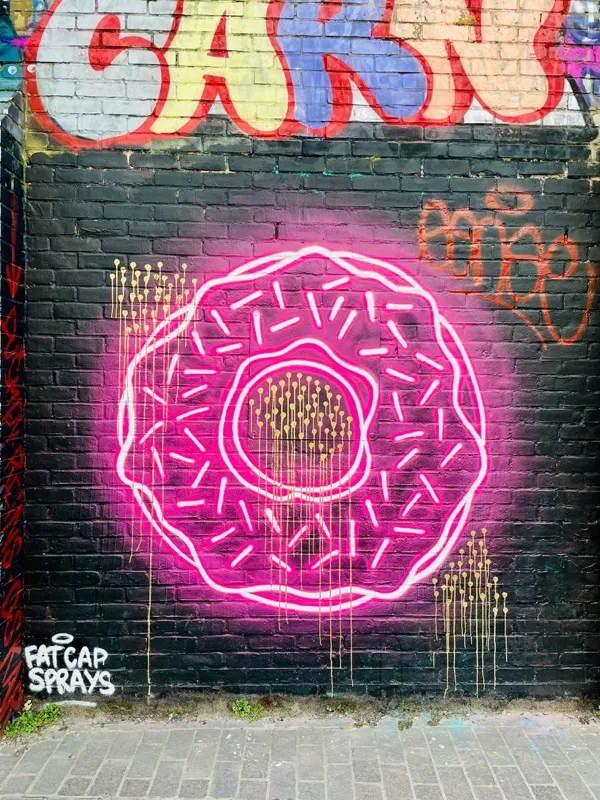
The context is shifting
Planetary boundaries are moving to the center of economic decisions. Raw materials are becoming scarcer, supply chains more fragile, regulation stricter. At the same time, societal expectations of companies are rising.
Those who only react lose time. Those who think ahead shape what comes.
A compass for entrepreneurial action
Doughnut Economics, developed by Kate Raworth, defines the space in which an economy can function without breaking ecological limits or undermining social foundations. For companies this means: aligning economic activity so that it regenerates ecologically and stabilizes socially.
This is not an abstract model. It gives companies concrete starting points for where to act.
Four areas we work on together
Doughnut Economics doesn't just touch the sustainability department. It concerns the way a company does business, creates value, and takes responsibility.
Purpose and strategy
What does your company want to contribute within planetary and social boundaries? We develop an answer that goes beyond compliance.
Value creation and business model
Where can linear processes be replaced by circular ones? Which parts of value creation need a new logic?
Supply chains and partnerships
How can relationships with suppliers, customers, and partners be rethought socially and ecologically?
Governance and finance
Which structures and capital sources support transformation — and which slow it down?
Who is Doughnut Economics for?
Large companies
who want to integrate ecological and social boundaries into their strategy, rather than merely meeting regulatory minimum requirements.
SMEs
who want to implement sustainability in a hands-on way and connect it with regional responsibility.
Family businesses
who want to secure long-term value across generations.
Start-ups
who want to embed sustainability in their business model from day one — as a differentiator for investors and customers.
Eco-businesses & social enterprises
who want to measure their impact more systematically and evolve their model.
Public-sector enterprises
who want to translate political sustainability goals into operational practice.
What does this deliver concretely?
Less dependency
Companies that operate in a circular and regionally diversified way are less exposed to volatile raw material markets. The Doughnut approach shows where these leverage points lie.
Stronger trust
Companies that act responsibly — ecologically and socially — build more resilient trust. This affects customer loyalty, talent acquisition, and financing conditions.
Anticipate regulation
Those who factor ecological and social boundaries into strategy today have less to rework tomorrow. That saves resources and creates room to maneuver.
Four phases to a transformation plan
Clarification
A preliminary conversation or short kick-off workshop. We clarify your starting point, define the focus, and align on who should be involved.
→ You receive: A shared target picture and an agreed process plan.
Analysis and vision
We examine your company's ecological and social impacts along the Doughnut model. Where do risks emerge? Where are the opportunities? From that we develop first future pictures.
→ You receive: Your central fields of action and strategic options.
Business design
Where does your business model enable transformation, where does it stand in the way? We identify starting points for a regenerative business design.
→ You receive: Concrete design approaches and first implementation steps.
Implementation and support
The approaches developed are translated into a roadmap: with clear responsibilities, fitting metrics, and regular iteration loops.
→ You receive: A transformation plan ready for implementation.
Consulting from the 36° Sustainability network
We are consultants from the 36° Sustainability network. Our approach combines scientific foundations with practical implementation experience. What drives us: supporting companies in evolving business models so that they become ecologically and socially viable.
Frequently asked questions
What distinguishes Doughnut Economics from classic sustainability consulting?
How long does a consulting process take?
Does my company already have to be sustainability-advanced?
What does the consulting cost?
Is funding available?
Let's talk
Tell us about your starting point. We will get back to you within 24 hours with an initial assessment of how we can support you.
Mehr über unser Team, Referenzen und aktuelle Projekte finden Sie auf unserer Website und auf LinkedIn: