Boris König
Data beats opinion – especially when it comes to climate-relevant decisions and real transformation. Anyone who wants to achieve impact needs more than gut feeling: evidence-based approaches that engage people and shape the future for our children.
Background and Expertise
Boris König supports organizations in transformation processes at the intersection of strategy, behavior, and sustainability. His focus is on translating abstract goals – such as climate or digitalization strategies – into concrete, effective behavioral changes in everyday work.
He combines many years of leadership experience in international corporations with evidence-based behavioral science, systemic thinking, and practical implementation. It is particularly important to him to actively involve employees and to design change in a way that is measurably effective and sustainable in the long term.
Focus Areas
- Cultural Change: Anchoring strategy and values in the daily behavior of teams and leaders
- Behavioural Design: Evidence-based design of frameworks that facilitate sustainability-oriented and climate-friendly action
- Digitalization & AI: Using digital solutions to support learning, decision-making, and implementation
- Workshops & Trainings: Co-creation formats for orientation, commitment, and concrete next steps
Work Experience
- Independent Management Consultant
- Lecturer at Danube University Krems
- Head of Strategic Marketing, Member of the Executive Board of an international building materials group
- Head of IT at an Austrian automotive and aerospace supplier
Education and Training
- Strategic Information Management, Danube University Krems
- Certified Tiny Habits Coach with B.J. Fogg, Stanford
- Positive Psychology Program, University of Pennsylvania
- Certified Digital Consultant, Incite
- Climate Fresk Facilitator, Climate Fresk
Five Questions for Boris König
What should people definitely know about you and your background?
I studied mathematics and strategic information management and worked for many years in leadership roles at the intersection of IT, digitalization, and marketing. Among other things, I built a strategic marketing department in an international corporation and worked intensively on positioning and branding. I see myself as a generalist with broad methodological knowledge and a clear systemic perspective. For over five years, my focus has been on behavioral change, initially at the individual level, and now increasingly at the organizational level and on corporate culture. I'm driven by the question of how sustainable and climate-friendly behavior can not only be decided upon but actually lived – and how sustainability can become part of the culture and thus the DNA of organizations.
What are you currently working on and what makes the project exciting?
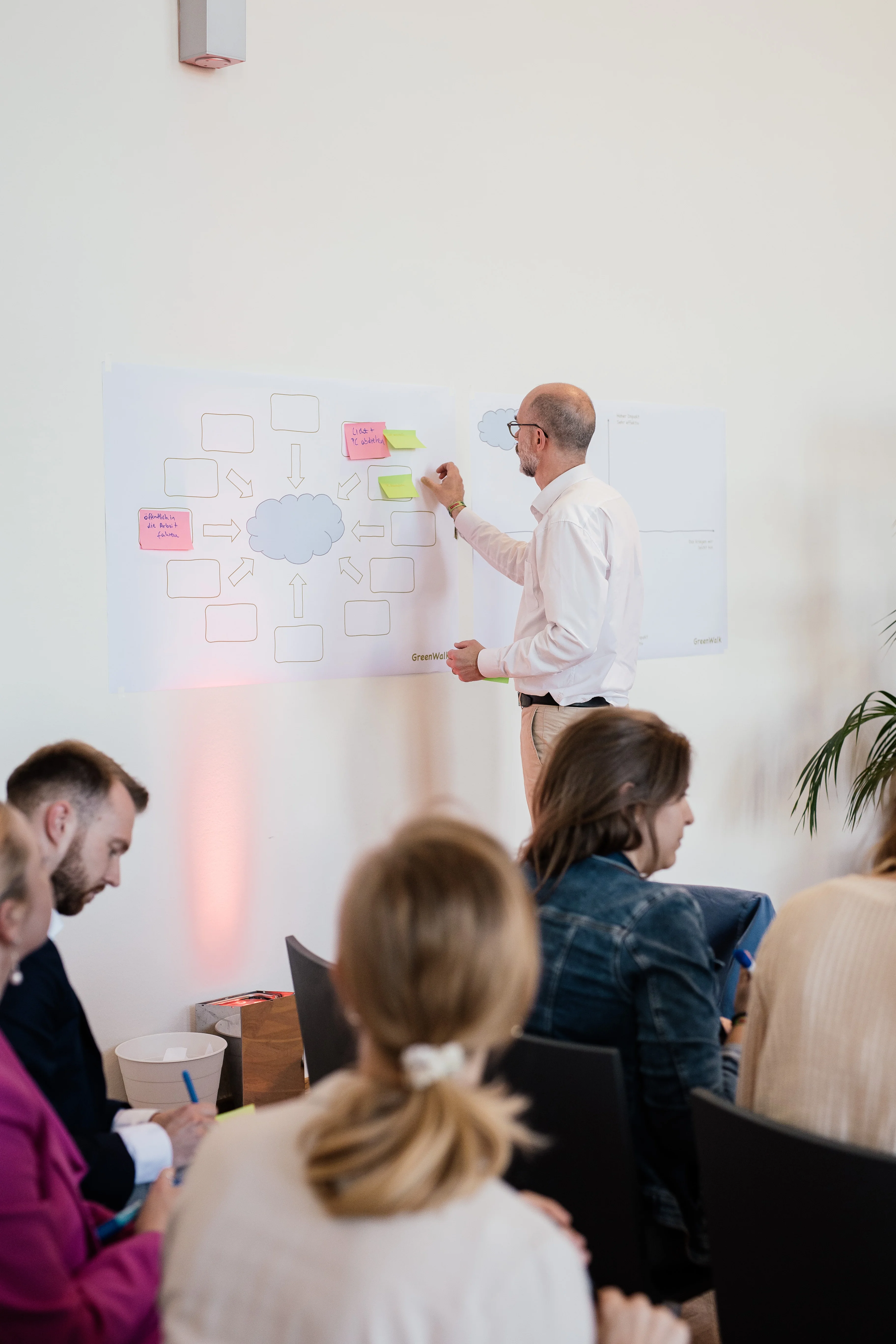
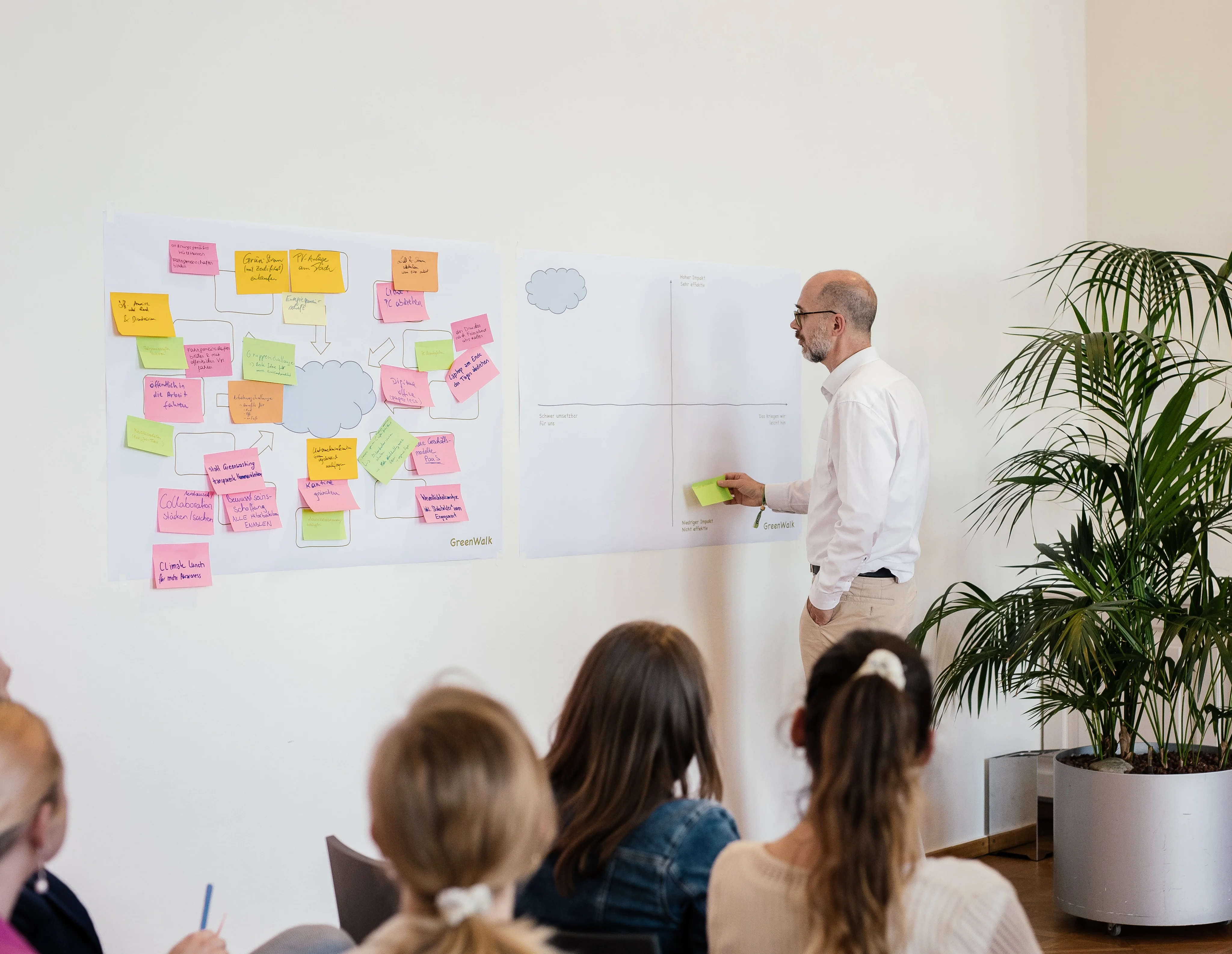
My main project is called "GreenWalk" – a structured entry format that helps organizations overcome the so-called intention-action gap, the step from good intentions to consistent action. What's particularly exciting for me is that GreenWalk is not a classic consulting project, but works like a product with a clear framework, repeatable, practical, and strongly behavior-oriented. This makes sustainable transformation tangible and connectable to the daily work of teams.
What drives you in your work for sustainable transformation?
I'm driven by the desire for a livable future for coming generations. Specifically also for my ten-year-old son. At the same time, it's important to me to work meaningfully and create impact. I see my strength in bringing people together, acting as a catalyst for ideas, and combining things that don't seem to belong together at first glance. Curiosity, creative joy, and the opportunity to really change something motivate me. I prefer working in small, committed teams and creating spaces where others can develop their potential.
What do you appreciate about interdisciplinary teamwork?
I'm naturally very curious. Interdisciplinary work opens new perspectives, enables learning, and helps to better understand the world and complex systems. At the same time, a shared value base is important to me with mutual respect, openness to other viewpoints, and genuine willingness to discuss. A good example is my collaboration with Ina Dimitrieva on the topic of risk culture in banks. Different professional approaches meet there – and that's exactly where value is created, for example when behavior-oriented perspectives complement classic governance approaches.
Where do you see the biggest levers for systemic change?
A central lever is clear political frameworks with binding goals, clear responsibilities, and planning security. Every transformation also produces losers – this must be openly named, and perspectives are needed to constructively address resistance. Another key lies in business itself, where companies must recognize opportunities, drive innovation, and at the same time actively demand the framework conditions that enable and reward sustainable action.
Contact
Interested in discussing your project? An initial, non-binding meeting or a sparring session to explore possible approaches?
Follow me for insights:
Visit my website: